

The Map is Not the Territory
In 1931, Polish-American philosopher and scientist Alfred Korzybski introduced a concept that would revolutionize fields from psychology to systems theory. During a lecture, he suddenly interrupted himself to fetch a packet of biscuits. As he munched on them, he announced to the stunned audience: “Ladies and gentlemen, I am eating the map, not the territory.” This dramatic demonstration illustrated his central thesis: “The map is not the territory“—our mental representations of reality are not reality itself. The models we create in our minds are necessarily simplified, incomplete, and sometimes dangerously misleading versions of what actually exists. What Does “The Map Is Not The Territory” Really Mean? At its core, this principle distinguishes between three crucial levels:The Map is Not the Territory 1. The Territory: Objective Reality This is the actual world as it exists, in all its complexity and detail. It’s the raw data of existence, independent of our observation or…
The Fermi Paradox hidden secretas
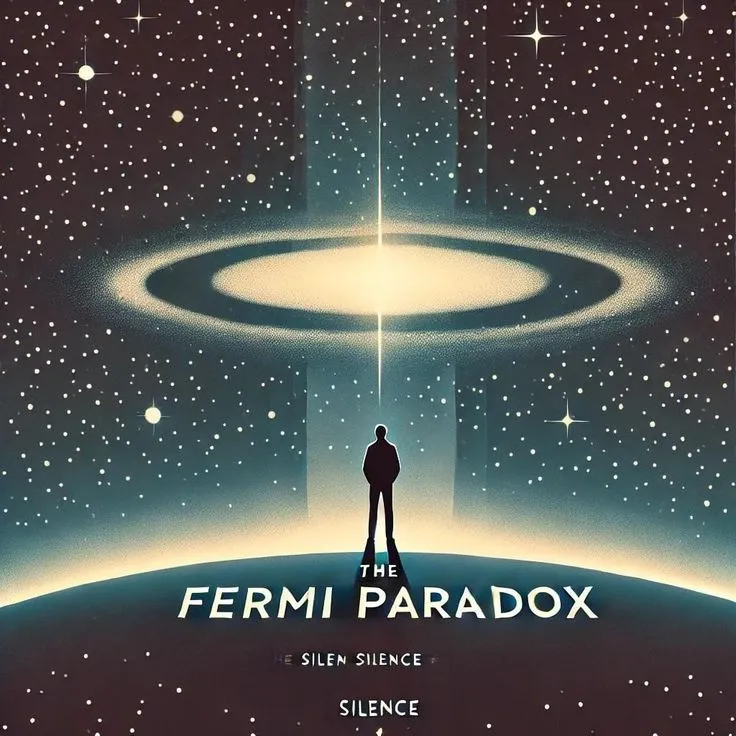
The Fermi Paradox In 1950, Nobel Prize-winning physicist Enrico Fermi was deep in conversation with colleagues at Los Alamos National Laboratory. The discussion, touching on flying saucers and the potential for faster-than-light travel, eventually shifted to the likelihood of intelligent life existing elsewhere in our vast universe. Amidst the chatter, Fermi suddenly blurted out a question that has since become legendary in scientific circles: “Where is everybody?“ This simple, almost childlike question encapsulates what we now know as the Fermi Paradox. It highlights a profound contradiction: our universe is unimaginably large and old, suggesting that intelligent life should be common, yet we have found no definitive proof that anyone else is out there. The Logic of the Paradox The power of the Fermi Paradox lies in its step-by-step, logical reasoning: Countless Suns: Our Milky Way galaxy alone contains an estimated 200 to 400 billion stars. Habitable Worlds: Many of these stars…