
USP -Unique Selling Proposition
Imagine you walk into an ice cream shop. The wall has 50 flavors. How do you choose? You read the labels: “Vanilla,” “Chocolate,” “Strawberry.” They all sound good, but nothing makes you go, “WOW, I NEED THAT!” Then you see a small sign at the bottom: “World’s Spiciest Chocolate Ice Cream – Made with Real Ghost Peppers. Dare to Try?” Suddenly, you’re not just looking at chocolate ice cream. You’re looking at an experience, a challenge, something totally different. That shop just gave its chocolate ice cream a USP. USP stands for Unique Selling Proposition. It’s a fancy name for a simple, powerful idea: Your USP is the one special reason why a customer should buy from YOU and not from the competition. It’s your business’s superpower. It’s your flag in the ground that says, “I am different, and here’s exactly how.” If your business was a person at a huge party, your USP would be the interesting thing you…
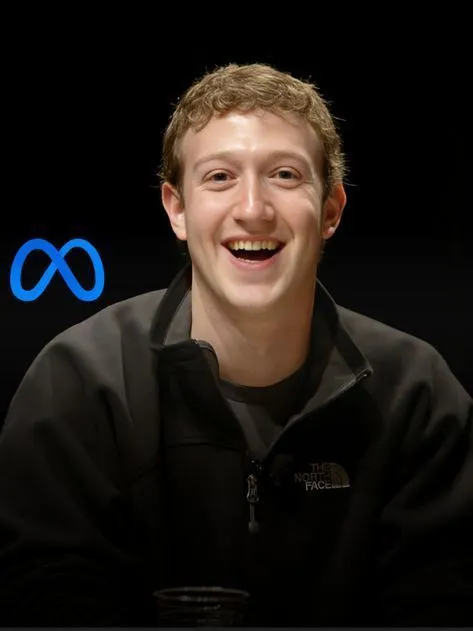
Mark Zuckerberg
Mark Zuckerberg ,Mark Elliot Zuckerberg was born on May 14, 1984, in White Plains, New York, to a dentist father and psychiatrist mother. His fascination with computers began early; by age 12, he had created “ZuckNet,” a messaging program for his family’s home. He attended Phillips Exeter Academy and later Harvard University, where his programming skills and entrepreneurial vision would soon change global communication forever. The Facebook Phenomenon In February 2004, from his Harvard dorm room, Zuckerberg launched “Thefacebook” with college roommates Eduardo Saverin, Andrew McCollum, Dustin Moskovitz, and Chris Hughes. The platform expanded rapidly to other universities, then to the general public, becoming “Facebook” in 2005. Its growth was unprecedented, reaching one billion users by 2012. In 2012, Facebook conducted one of the largest tech IPOs in history, valuing the company at $104 billion.Mark Zuckerberg Business Empire and Corporate Structure Meta Platforms, Inc. (Formerly Facebook, Inc.) Facebook rebranded to…

Jeff Bezos
In the span of a single decade, Jeff Bezos transformed a modest online bookseller operating from his garage into a global empire so vast that by 2021, nearly half of every dollar spent online in the United States flowed through its platform. His journey from a visionary Wall Street executive to the world’s most influential retail and technology pioneer is a masterclass in long-term thinking, customer obsession, and relentless innovation. Jeffrey Preston Bezos, born on January 12, 1964, is not merely the founder of Amazon; he is the principal architect of modern e-commerce and cloud computing. His story embodies the seismic shift from the brick-and-mortar 20th century to the digital, on-demand 21st. More than any other individual, Bezos defined the experience of online shopping and, in doing so, rewrote the rules of business, logistics, and consumer expectation. This is the chronicle of how a simple idea—the “everything store”—became the foundation for…
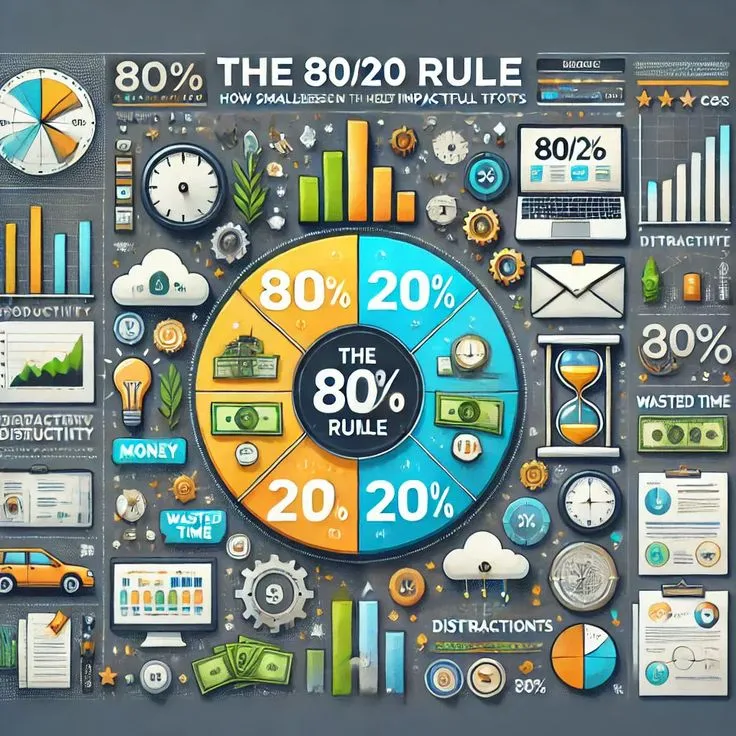
The 80/20 Principle
The 80/20 Principle.In 1897, Italian economist Vilfredo Pareto made a fascinating observation in his garden. He noticed that roughly 20% of the pea pods produced 80% of the peas. Being an economist, he extended this observation to wealth distribution and discovered that 20% of the Italian population owned 80% of the land. This simple observation would eventually become one of the most powerful productivity principles in history: the 80/20 rule or Pareto Principle. The core insight is both simple and profound: in most areas of life, a small minority of causes (around 20%) create the majority of results (around 80%). Understanding this principle can revolutionize how you work, live, and think about achievement. The Mathematics of Effectiveness The 80/20 principle isn’t about exact mathematical precision—it’s about recognizing consistent patterns of imbalance: 20% of customers typically generate 80% of revenue 20% of products usually account for 80% of sales 20% of your activities…
The Sunk Cost Fallacy
In the 1960s, the British and French governments jointly developed the Concorde supersonic jet—a revolutionary but economically doomed project. Despite knowing the aircraft would never be profitable, both governments continued pouring billions into development. When questioned, officials famously responded, “We cannot stop now, after having already spent so much.” This perfect example of the sunk cost fallacy demonstrates our powerful tendency to continue investing in losing propositions simply because we’ve already invested significant resources. From failed relationships to money-losing business projects, this cognitive trap costs individuals and organizations billions annually while causing immense emotional distress. What Exactly is the Sunk Cost Fallacy? The sunk cost fallacy occurs when we consider irrecoverable past investments when making decisions about the future. These “sunk costs”—whether financial, temporal, or emotional—should theoretically be irrelevant to rational decision-making. Yet psychologically, we find it incredibly difficult to ignore them. Classic Examples Include: Sitting through a terrible movie because “I…