
The Indian state of Bihar, with its population exceeding 120 million—larger than most countries—represents one of the world’s most complex and significant democratic exercises when it goes to polls. As India’s third most populous state and one with profound political influence in national politics, Bihar’s elections are scrutinized with intense passion. Over the decades, various political actors, analysts, and citizens have raised concerns about electoral integrity, sometimes employing strong rhetoric like labeling elections a “scam.” This article provides a comprehensive, evidence-based examination of Bihar’s electoral process, analyzing the challenges it has faced, the reforms implemented, and the multiple perspectives on its integrity.
Historical Context – Bihar’s Troubled Democratic Journey
Bihar’s political history since Independence reveals why questions about electoral integrity emerge with cyclical regularity:
The Early Decades (1950s-1960s): Bihar initially enjoyed relatively clean elections, with the Congress party dominating under leaders like Krishna Sinha and Anugrah Narayan Sinha. Political competition existed but electoral malpractices were limited in scale and nature.
The Descent (1970s-1980s): The period saw the emergence of “booth capturing” as a serious concern. Armed groups would literally seize polling stations, stuff ballot boxes, and intimidate voters and officials. This phenomenon reached alarming proportions in the 1980s, particularly in regions with strong feudal structures and caste-based militias. Elections in constituencies like Goh, Barh, and Bikram saw particularly brazen violations.
The Jungle Raj Perception (1990s): The tenure of Chief Minister Lalu Prasad Yadav’s Rashtriya Janata Dal (RJD) became synonymous with what critics called “jungle raj”—a breakdown of law and order that inevitably affected electoral integrity. The 1995 assembly elections witnessed unprecedented violence, with reports of 53 deaths in poll-related violence. Booth capturing became systematic in certain constituencies.
The Turning Point (2000s): The 2005 elections represented a watershed. After an inconclusive February election, President’s Rule was imposed, and fresh elections in October-November saw perhaps the most dramatic improvement in electoral conduct, facilitated by massive security deployment and administrative overhaul.
Contemporary Era (2010-Present): Recent elections have been markedly more peaceful with reduced overt violence, though allegations have evolved to focus on “money power,” “muscle power” in subtler forms, and administrative bias.
Documented Electoral Challenges in Bihar
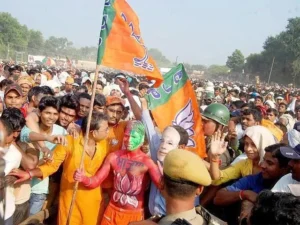
Multiple official reports, judicial observations, and journalistic investigations have documented specific challenges:
1. Booth Capturing and Voter Intimidation
Historically the most glaring issue, this involved:
-
Armed groups occupying polling stations
-
Driving away supporters of rival candidates
-
Forcibly stamping ballots in favor of specific candidates
-
Threatening polling officials
The 1990s saw this reach industrial scale in certain regions like central Bihar.
2. Electoral Violence
Bihar consistently ranked highest in election-related violence for decades. The 1995 elections saw the highest toll, but significant violence continued through the 2000s, with the 2010 elections still reporting 12 deaths.
3. Money Power and Bribery
As overt violence decreased, the influence of money increased exponentially. A 2017 study by the Association for Democratic Reforms found that candidates with serious criminal cases were three times more likely to win than those with clean records, suggesting the resources needed for “electoral success” often came from questionable sources. The “note for vote” phenomenon became widely reported.
4. Criminalization of Politics
The symbiotic relationship between politicians and criminal elements for electoral “muscle power” has been extensively documented. Many candidates with serious criminal charges have consistently contested and won elections, particularly from certain parties across the political spectrum.
5. Administrative and Police Bias
Allegations of collusion between local administration and the ruling party have been common. Transfers of “inconvenient” officials before elections became routine, prompting the Election Commission to implement strict transfer policies.
6. Fake Voting and Bogus Votes
Despite photo voter slips and EPIC cards, concerns about impersonation and inclusion of fake names in voter lists have persisted, though technological interventions have reduced this significantly.
7. Caste-Based Polarization and Coercion
The pressure on Dalits and marginalized communities to vote according to the wishes of dominant castes in their villages represented a more subtle form of electoral manipulation.
The Election Commission’s Evolving Response
India’s Election Commission has implemented progressively stronger measures in Bihar, often using the state as a laboratory for nationwide reforms:
The “Fearless Election” Model (2005)
For the 2005 re-poll, the EC deployed unprecedented security:
-
584 companies of central paramilitary forces (over 50,000 personnel)
-
Videography of all polling stations
-
Strict curbs on campaigning and movement
-
Randomization of police and administrative postings
This model became the template for elections in sensitive areas nationwide.
Technological Interventions
-
Electronic Voting Machines (EVMs): Introduced in phases, now universal. Despite some academic concerns, they have eliminated booth capturing’s primary purpose—ballot stuffing.
-
Voter-Verified Paper Audit Trail (VVPAT): Mandatory since 2017, providing physical verification of votes cast.
-
Webcasting: From critical polling stations to increasing percentages.
-
Suvidha Portal: For transparent permission granting for rallies.
Administrative Measures
-
Model Code of Enforcement: Strict expenditure monitoring, seizure of illicit cash/liquor.
-
Special Observers: Retired senior civil servants deployed as general, police, and expenditure observers.
-
Flying Squads and Static Surveillance Teams: Quick response teams for violations.
-
Accountability Framework: Making District Magistrates and Superintendents of Police personally responsible for electoral integrity.
Legal and Procedural Innovations
-
Stringent Timelines: Reducing window for malpractices during actual polling.
-
Cluster Randomization: Of polling personnel to prevent local collusion.
-
Vulnerability Mapping: Identifying sensitive booths for special attention.
Judicial Oversight and Landmark Interventions
The judiciary has played a crucial role in shaping Bihar’s electoral integrity:
The Bihar Footwear Case (1995): The Patna High Court’s observation that “the only industry flourishing in Bihar is the manufacture of footwear for election officials” (referring to the practice of officials taking bribes to look away) highlighted administrative corruption.
Supreme Court’s Interventions: The apex court has consistently reinforced the Election Commission’s authority to ensure free and fair polls, particularly in sensitive states like Bihar.
Criminalization of Politics Cases: The Supreme Court’s directives (2014, 2018) mandating faster trials for politicians and disclosure of criminal records have had significant impact, though implementation remains partial.
Public Interest Litigations: Various PILs have forced greater transparency in election processes, candidate affidavits, and campaign financing.
The “Scam” Narrative: Deconstructing the Rhetoric
When politicians or activists call an election a “scam,” they typically point to several categories of allegations:
1. EVM Tampering Allegations
Despite no evidence of successful tampering in Indian elections, losing parties frequently raise this concern. After the 2020 Bihar elections, RJD initially questioned EVMs but later shifted to other allegations. Technical experts note that EVMs in India are standalone devices without networking capability, making large-scale manipulation extraordinarily difficult.
2. Administrative Bias Claims
The party losing elections typically alleges that the state machinery favored the incumbent. After the 2020 elections, RJD claimed officials were pressured by the ruling NDA. Similar claims were made by BJP when in opposition in 2015.
3. Money Power Allegations
All sides accuse opponents of using illicit money to bribe voters. The 2020 elections saw record seizures of cash, liquor, and drugs (over ₹200 crore worth), suggesting massive financial manipulation attempts.
4. Vote Fraud Allegations
Despite VVPATs, allegations of miscounted votes persist, though the mandatory verification of randomly selected booths (increased from 1 to 5 per assembly segment by Supreme Court order) provides statistical confidence.
5. Narrative of “Institutional Bias”
Some critics allege systemic bias favoring the party at the Centre, given the Election Commission’s appointment process. However, the EC’s strict actions against ruling parties in various states undermine simplistic versions of this claim.
Empirical Evidence and Data Analysis
Objective data provides a more nuanced picture than rhetorical claims:
Declining Violence: Election-related deaths have steadily declined: 53 (1995), 32 (2000), 12 (2010), 5 (2015), 3 (2020).
Increasing Voter Turnout: Despite (or because of) improved integrity, turnout has increased: 46% (1990), 62% (2020), suggesting greater voter confidence.
Close Margins and Alternation of Power: The fact that elections produce close results and frequent changes in government suggests manipulation cannot be total. In 2020, the NDA won by a razor-thin majority (125 seats in 243-seat assembly), with many seats decided by margins under 5,000 votes.
International Observation: While India doesn’t invite formal international observation, scholars studying Bihar’s elections have noted significant improvement since 2005.
Judicial Validation: Election petitions (legal challenges to results) succeed in only a tiny percentage of cases, suggesting courts find most allegations unsubstantiated.
Remaining Challenges and Ongoing Concerns
Despite improvements, legitimate concerns persist:
1. Money Power in New Forms: As direct vote-buying becomes harder, money influences elections through:
-
Paid news and social media manipulation
-
Extensive beneficiary networks
-
Post-election inducements
2. Subtle Voter Intimidation: Coercion has become less violent but more psychological, particularly for marginalized communities.
3. Data and Privacy Concerns: The extensive collection of voter data for micro-targeting raises concerns about manipulation and exclusion.
4. Social Media Misinformation: The unregulated spread of false information poses new challenges to informed voting.
5. Electoral Bonds (Now Struck Down): The now-invalidated electoral bonds system created opacity in political funding, affecting all Indian elections including Bihar’s.
Comparative Perspective – Bihar in the Indian Context
Is Bihar uniquely problematic? Comparative analysis reveals:
-
Many challenges in Bihar exist across Indian states: money power in Tamil Nadu, caste-based polarization in Uttar Pradesh, violence in West Bengal’s earlier elections.
-
What made Bihar distinctive was the scale and brazenness of booth capturing in the 1990s.
-
Today, Bihar’s elections are arguably better conducted than several states with less scrutiny.
-
The state’s poverty and social complexity make electoral integrity more challenging but not impossible.
The Way Forward – Strengthening Democratic Integrity
Multiple reforms could further enhance confidence in Bihar’s elections:
1. Campaign Finance Reform: Complete transparency in political funding, with real-time disclosure and strict caps.
2. Strengthening the Election Commission: Constitutional protection for Election Commissioners and a more transparent appointment process.
3. Faster Disposal of Election Petitions: Special fast-track courts for electoral disputes.
4. Democratic Decentralization: Strengthening local bodies to reduce stakes in state elections.
5. Voter Education: Continuous civic education beyond Election Commission’s SVEEP program.
6. Regulating Digital Campaigning: Clear rules for social media campaigning and fact-checking protocols.
Conclusion: Beyond the Rhetoric of “Scam”
Labeling Bihar’s entire electoral process a “scam” oversimplifies a complex reality. The historical trajectory shows undeniable improvement from the dark days of booth capturing to today’s relatively orderly, high-turnout elections. This progress resulted from institutional strengthening, technological innovation, judicial oversight, and civic vigilance.
However, dismissing all concerns would be equally misguided. The evolution from “booth capturing” to “money power” and now to “information manipulation” shows that electoral malpractice adapts to new contexts. The challenge for Bihar—and Indian democracy generally—is institutional adaptation to these evolving threats.
The true measure of electoral integrity isn’t the absence of allegations—in a competitive democracy, losing sides will always question processes—but whether those allegations have credible evidence, whether institutions address them transparently, and whether power alternates according to genuine voter preference. By these measures, Bihar has come a long way but still has distance to travel.
Ultimately, calling an election a “scam” is often political rhetoric. The more productive conversation focuses on specific vulnerabilities and concrete reforms. Bihar’s democracy, like India’s, remains a work in progress—flawed, contested, but fundamentally resilient. Its elections are not a scam, but they are a constant test of whether India’s democratic institutions can protect the most important scam of all: the sacred trust between citizen and state that forms democracy’s foundation.


 Editor