
Bharatiya Janata Party
The Bharatiya Janata Party, commonly known as the BJP, is one of India’s largest and most influential political parties. Over the past four decades, it has played a major role in shaping India’s political landscape, governance model, economic direction, and national identity. With strong organizational roots, a widespread support base, and a clear ideological framework, the BJP has grown from a small political force to the dominant national party in India. This article explores its history, ideology, leadership, organizational structure, policies, achievements, criticism, and its changing role in modern Indian politics.
The origins of the BJP trace back to the Bharatiya Jana Sangh (BJS), founded in 1951 by Dr. Syama Prasad Mookerjee. The Jana Sangh promoted cultural nationalism and aimed to represent the voices of Hindu society in independent India. For many years, the party remained relatively small, although it gained influence in northern and western states.
In 1977, after the Emergency imposed by Prime Minister Indira Gandhi, the Jana Sangh merged with several other parties to form the Janata Party. This new alliance defeated the Congress Party and formed the government at the national level for the first time. However, ideological differences among Janata Party members led to internal conflicts.
In 1980, former Jana Sangh members separated and formed a new political party—the Bharatiya Janata Party (BJP). This marked the beginning of the modern BJP.
Ideology and Philosophy
The BJP’s core ideology is based on Hindutva and cultural nationalism, inspired by the teachings of the Rashtriya Swayamsevak Sangh (RSS), a socio-cultural organization that promotes national unity and cultural values. While the party states that Hindutva represents cultural identity rather than religious exclusiveness, critics often argue otherwise.
The party’s primary ideological principles include:
1. Cultural Nationalism
BJP emphasizes India’s ancient civilization, cultural heritage, and traditions. It promotes nationalism rooted in Indian culture rather than Western political ideas.
2. Integral Humanism
The party follows the philosophy of Deendayal Upadhyaya, which focuses on economic self-reliance, social harmony, and balanced development.
3. Strong National Defense
The BJP advocates for a powerful military, robust national security policies, and a tough stance on terrorism.
4. Market-Friendly Economic Policies
The party promotes modernization, economic reforms, industrial growth, digital transformation, and support for entrepreneurship.
5. Good Governance
Transparency, efficiency, anti-corruption measures, and technology-driven administration are key components of its governance model.
Rise of the BJP
The BJP’s political growth has been gradual but steady. In the 1984 general elections, following the assassination of Prime Minister Indira Gandhi, the BJP won only two seats in the Lok Sabha. However, within a few years, the party’s support grew significantly due to national issues, organizational strength, and changing political sentiments.
Key movements and milestones in BJP’s rise:
1. Ram Janmabhoomi Movement
The movement for the construction of a Ram Temple in Ayodhya boosted the BJP’s popularity across the country. It helped the party connect with a large section of the Hindu population.
2. Coalition Era
Between 1998 and 2004, the BJP led the National Democratic Alliance (NDA) government under Prime Minister Atal Bihari Vajpayee. His leadership earned national and international respect.
3. 2014 Landslide Victory
The BJP achieved a historic win in 2014 with Narendra Modi as its prime ministerial candidate. The campaign focused on development, economic growth, corruption-free governance, and strong leadership.
4. Continued Dominance
The BJP also won the 2019 and 2024 general elections, solidifying its position as the central power in Indian politics.
Leadership
The BJP has been shaped by several prominent leaders over its history.
Atal Bihari Vajpayee
A statesman known for his moderate approach, Vajpayee served as Prime Minister and strengthened India’s global standing. His government carried out nuclear tests in 1998 and initiated major road infrastructure projects.
Lal Krishna Advani
A major architect of the party’s growth, Advani played a key role in expanding organizational strength and taking the BJP to national prominence.
Narendra Modi
As the Prime Minister since 2014, Modi has become the face of the party. His leadership style focuses on nationalism, economic reform, global diplomacy, digital governance, and social welfare schemes.
Amit Shah
Known as a master strategist, Amit Shah strengthened the BJP’s organizational structure, expanded its presence, and shaped its electoral strategies nationwide.
Organizational Structure
The BJP has one of the strongest political organizational networks in India—heavily inspired by the RSS model of cadre development.
1. Strong Ground-Level Cadre
Lakhs of volunteers and workers engage in grassroots activities, campaigns, community programs, and ideological training.
2. Mahila, Yuva, and Minority Cells
These wings focus on mobilizing women, youth, and minority communities.
3. IT and Social Media Cell
The BJP is known for its powerful digital presence, advanced data analytics, and effective social media communication.
Policies and Governance Approach
The BJP government emphasizes development and economic growth through multiple initiatives.
Economic Reforms
- Make in India
- Digital India
- GST implementation
- Startup India
- Infrastructure development (roads, highways, railways, airports)
Social Welfare Schemes
- Ujjwala Yojana (free LPG connections)
- Ayushman Bharat (health insurance)
- Swachh Bharat Abhiyan (cleanliness mission)
- PM-KISAN (income support for farmers)
- Jan Dhan Yojana (bank accounts for all)
National Security
The BJP positions itself as a strong defender of India’s borders and internal security, focusing on counter-terrorism and military modernization.
Cultural Policies
Promotion of Indian languages, yoga, heritage, and traditional practices is a key part of the party’s cultural agenda.
Achievements of the BJP
Supporters of the BJP highlight several achievements:
1. Economic Growth and Modernization
Large-scale infrastructure projects, digital transformation, and industrial development have expanded India’s global role.
2. Global Diplomacy
Under Modi’s leadership, India has strengthened ties with major countries and improved its international image.
3. Strong Governance
Many believe that transparency, efficiency, and accountability have increased under BJP rule.
4. Social Schemes
Millions of families have benefited from housing, healthcare, banking, and welfare programs.
5. Cultural Revival
The construction of the Ram Mandir in Ayodhya in 2024 is considered a major cultural milestone for supporters. Bharatiya Janata Party
Criticism and Challenges
Like any political party, the BJP also faces criticism from various groups.
1. Concerns About Secularism
Critics argue that the party promotes majoritarian politics, though the BJP denies these accusations.
2. Economic Concerns
Unemployment, price rise, and rural distress remain key challenges despite development efforts.
3. Centralization of Power
Some analysts believe that decision-making has become too centralized under the current leadership. Bharatiya Janata Party
4. Freedom of Speech Concerns
Certain groups claim that dissent faces pressure, while the government argues that law and order must be maintained.
5. Political Polarization
The political environment in India has become more polarized, with strong opinions on both sides.
The BJP’s Role in Modern India
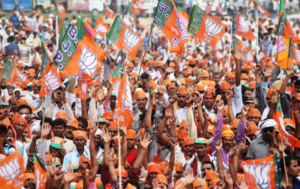
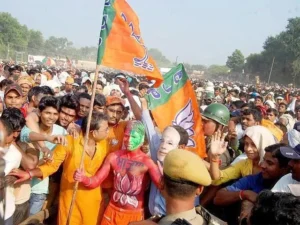
The BJP today is not just a political party but a powerful force influencing governance, society, culture, and national identity. It has a massive support base among young voters, middle-class families, entrepreneurs, rural communities, and first-time voters. Its communication strategy, welfare initiatives, nationalism-driven messaging, and digital outreach make it a dominant political power.
As India enters a new era of economic and technological growth, the BJP is likely to continue shaping the nation’s direction. Whether one supports or opposes it, there is no doubt that the BJP plays a major role in defining modern Indian politics. Bharatiya Janata Party


 Surendra