
Clinsol Gel isn’t just another acne cream on the pharmacy shelf; it is a targeted, prescription-only medical treatment representing a modern approach to combating inflammatory acne. In a world saturated with over-the-counter salicylic acid and benzoyl peroxide washes, Clinsol offers a potent, dual-ingredient formula designed to act at the very root of the acne formation process. This comprehensive guide explores every facet of Clinsol Gel—its unique composition, its precise mechanism of action, its appropriate applications, and the critical considerations for safe and effective use.
1. Decoding the Formulation: A Powerful Synergistic Blend
At its core, Clinsol Gel is a combination topical therapy. Its efficacy stems from two active pharmaceutical ingredients working in concert:
-
Clindamycin Phosphate (1% w/w): This is a lincomycin antibiotic. Its role is antibacterial. It specifically targets and eliminates Cutibacterium acnes (formerly Propionibacterium acnes), the bacteria that proliferates within clogged pores, triggering inflammation and leading to the formation of red, painful pustules and papules. By reducing this bacterial load, clindamycin directly addresses the infectious component of acne.
-
Nicotinamide (4% w/w): Also known as Niacinamide (Vitamin B3), this component is the multi-tasking hero of the formula. It is not an antibiotic and does not contribute to antibiotic resistance. Its actions are multi-faceted:
-
Anti-inflammatory: It significantly reduces the redness, swelling, and tenderness of existing acne lesions, providing soothing relief.
-
Sebum Regulation: It helps modulate excessive oil (sebum) production from the sebaceous glands, a primary driver of pore clogging.
-
Barrier Repair: It strengthens the skin’s natural moisture barrier, improving overall skin resilience and reducing transepidermal water loss, which can be compromised by other acne treatments.
-
Hyperpigmentation: It helps prevent and fade post-acne dark spots (post-inflammatory hyperpigmentation) by inhibiting the transfer of melanin to skin cells.CLINSOL GEL
-
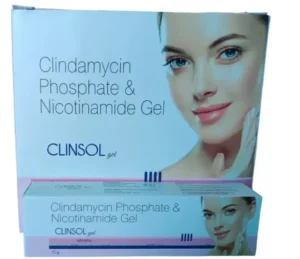
This combination of an antibiotic (clindamycin) and an anti-inflammatory, sebum-regulating agent (nicotinamide) makes Clinsol particularly effective for moderate inflammatory acne, where both bacteria and inflammation are key players.
2. The Mechanism: How It Works on a Cellular Level
Understanding how Clinsol Gel works requires a peek into the acne formation cascade. Acne begins with a microcomedone—a plugged hair follicle. Excess sebum and dead skin cells create an ideal, oxygen-poor environment for C. acnes to multiply.
-
Antibacterial Assault (Clindamycin): Clindamycin phosphate penetrates the follicle. It is then hydrolyzed to its active form, clindamycin, which binds to the 50S subunit of the bacterial ribosome. This inhibits bacterial protein synthesis, effectively halting the growth and replication of C. acnes. A reduced bacterial population means fewer inflammatory signals are released.
-
Inflammation Control & Sebum Management (Nicotinamide): Nicotinamide works concurrently through several pathways. It inhibits the activation of inflammatory cytokines (like TNF-α) and the enzyme phospholipase A2, which are involved in generating inflammatory mediators. Furthermore, it demonstrates anti-androgenic activity at the sebaceous gland, leading to a reduction in sebum production. By also bolstering ceramide synthesis in the skin barrier, it mitigates the irritation often caused by acne treatments, enhancing tolerability.CLINSOL GEL
The synergy is clear: Clindamycin attacks the cause (bacteria), while Nicotinamide manages the consequences (inflammation, oil, irritation). This dual-pathway approach makes it more effective than either component alone for its indicated use.
3. Approved Uses: When is Clinsol Gel Prescribed?
Clinsol Gel is specifically formulated for a well-defined set of conditions. It is not a general-purpose cleanser or a spot treatment for the occasional pimple.
Primary Indication:
-
Moderate Inflammatory Acne Vulgaris: This is its main arena. It is ideal for treating acne characterized by a mix of papules (red bumps) and pustules (pus-filled bumps). It is less effective for non-inflammatory acne (blackheads and whiteheads) as a monotherapy, and not intended for severe nodulocystic acne.
Potential Adjunctive Uses (as per dermatologist’s advice):
-
Acne Rosacea: Particularly the papulopustular subtype, where its anti-inflammatory and antibacterial properties can be beneficial.
-
Perioral Dermatitis: In some cases, dermatologists may prescribe it off-label due to its anti-inflammatory profile.
-
As Maintenance Therapy: After initial control of acne with stronger oral or topical medications, Clinsol can be used for long-term maintenance due to the non-antibiotic benefits of nicotinamide and the low risk of resistance when used in this combination.
4. The Critical “How-To”: Application Protocol for Success
Correct application is non-negotiable for efficacy and safety.
-
Preparation: Start with a gentle, non-abrasive cleanser and lukewarm water. Pat your face completely dry with a clean towel. Important: Wait 10-15 minutes after washing. Applying to damp skin can increase irritation and alter absorption.
-
Dispensing: Use a pea-sized amount for the entire face. More is not better and will increase the risk of side effects.
-
Application: Dot the gel onto the forehead, cheeks, chin, and nose. Using a clean fingertip, gently spread it into a thin, even film over all acne-prone areas, not just on individual spots. This prophylactic approach prevents new lesions from forming.
-
Frequency: Typically prescribed for once-daily application, often in the evening. Follow your dermatologist’s instructions precisely.
-
Moisturize & Protect: After the gel has dried (wait a few minutes), apply a non-comedogenic, oil-free moisturizer to counteract potential dryness. During the day, sunscreen (SPF 30 or higher) is mandatory, as acne-prone skin and some treatments can be more susceptible to sun damage and hyperpigmentation.CLINSOL GEL
5. Side Effects: From Common to Rare
A. Very Common (Affect more than 1 in 10 people):
-
Dryness, Peeling, and Tightness: Especially during the first 2-4 weeks as the skin adapts. This is often a sign it is working.
-
Mild Erythema (Redness) and Burning/Stinging: Transient sensation upon application.
B. Common (Affect up to 1 in 10 people):
-
Itching (Pruritus) and Skin Irritation.
-
Oily or Shiny Skin: A paradoxical effect sometimes seen initially.
C. Uncommon but Important:
-
Allergic Contact Dermatitis: Signs include severe itching, rash, swelling, or blistering at the application site. Discontinue use and consult your doctor.
-
Gastrointestinal Effects: With prolonged, extensive use, systemic absorption of clindamycin is possible and may rarely cause antibiotic-associated colitis (severe diarrhea, abdominal cramps). This is extremely rare with topical, face-only use.
-
Antibiotic Resistance: A significant global concern. Using clindamycin as a monotherapy for long periods can lead to resistant C. acnes strains. The inclusion of nicotinamide and the recommendation for short-term, course-based treatment (often 12 weeks or less) aim to mitigate this risk.
6. Price, Availability, and Market Context
-
Status: Prescription-only (Rx). This is a regulated medicine.
-
Price in India (Approximate): A 20gm tube typically costs between ₹320 and ₹450, depending on the pharmacy and location. It is considered a mid-range priced topical acne treatment.
-
Manufacturer: Commonly associated with Solarium Pharmaceuticals.
-
Generic Availability: The clindamycin + nicotinamide combination is available under other brand names (e.g., Clindamycin-N, Nicsol Gel), which may offer cost alternatives.
-
Value Proposition: Its price reflects the cost of combining two proven active ingredients in a stable gel base.CLINSOL GEL Compared to purchasing separate products (a clindamycin lotion and a nicotinamide serum), it can be more convenient and potentially more cost-effective under prescription guidance.
7. Advantages, Disadvantages, and Final Verdict
| Advantages | Disadvantages |
|---|---|
| Dual-Action Efficacy: Targets both bacteria and multiple inflammatory pathways. | Prescription Mandatory: Requires a dermatologist’s consultation and diagnosis.CLINSOL GEL |
| Nicotinamide Benefits: Offers sebum control, barrier repair, and fades dark spots—beyond just clearing active acne.CLINSOL GEL | Not for All Acne Types: Poor efficacy on purely comedonal acne (blackheads/whiteheads). |
| Generally Well-Tolerated: The nicotinamide component helps soothe skin and reduce the irritation common with other topicals like retinoids or benzoyl peroxide. | Risk of Resistance: The clindamycin component carries a risk of bacterial resistance if misused or overused.CLINSOL GEL |
| Cosmetically Elegant: Gel base is often non-greasy, absorbs well, and is suitable for oily, acne-prone skin types.CLINSOL GEL | Initial “Purging”: Some users may experience an initial flare-up as underlying microcomedones surface.CLINSOL GEL |
| Non-Comedogenic: Formulated specifically not to clog pores. | Sun Sensitivity: Requires diligent daily sunscreen use. |
Conclusion:
Clinsol Gel represents a sophisticated, evidence-based step in topical acne care. It is not a first-line treatment for every blemish but a targeted weapon against inflammatory acne, prescribed after a professional assessment. Its intelligent formulation leverages the strengths of both an antibiotic and a versatile skin-normalizing agent. For the right patient—one struggling with persistent red and pus-filled bumps—it can be a highly effective solution. However, its status as a prescription drug underscores the core message: Effective acne management is a medical process. Success with Clinsol hinges on professional diagnosis, disciplined application, and adherence to the prescribed treatment course, all within a holistic skincare routine that includes gentle cleansing and relentless sun protection. It is a tool of precision, not a product of convenience.


 Editor