
IndiGO Dominance, Disruptions, and the Road Ahead for India’s Aviation Giant
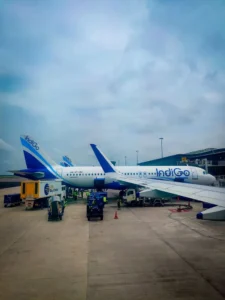
ndiGo, operated by InterGlobe Aviation Ltd., is not just an airline; it is a phenomenon that has fundamentally transformed Indian aviation. From its inaugural flight in August 2006, the airline has ascended to a position of unparalleled dominance, commanding over 60% of the domestic market share as of 2024. With a fleet of more than 350 aircraft and orders for nearly 1,000 more, IndiGo connects over 85 domestic and 115 international destinations. Its signature low-cost, efficient, and punctual model made it the preferred choice for millions of new Indian flyers, symbolizing the aspirations of a growing economy. However, this story of meteoric rise is now punctuated by a recurring narrative of operational turmoil—mass flight cancellations, stranded passengers, and a growing erosion of trust. This comprehensive article examines the anatomy of IndiGo, the complex web of reasons behind its recurring crises, and the strategic pathways it must adopt to secure its future and, by extension, the stability of Indian air travel.
Part 1: The Pillars of IndiGo’s Success
To understand its current challenges, one must first appreciate the foundational strategies that propelled IndiGo to the top.
1. The Unwavering Low-Cost Carrier (LCC) Model:
IndiGo executed the classic LCC playbook with meticulous precision. It operated a single aircraft type (Airbus A320 family), ensuring simplified training, maintenance, and operational efficiency. It maximized aircraft utilization, aiming for over 12 hours of daily flying time per plane. Its quick turnaround times—often under 30 minutes—boosted productivity. Ancillary revenue from seat selection, meals, and priority services was aggressively optimized, keeping base fares deceptively low.
2. Financial Prudence and Market Timing:
Unlike many competitors who faltered (like Kingfisher and Jet Airways), IndiGo maintained a fortress balance sheet, especially in its early years. Its landmark 2015 IPO infused capital for aggressive expansion. It capitalized perfectly on the market gaps left by failing rivals, capturing their slots, routes, and customer base.
3. Operational Punctuality as a Brand Promise:
For over a decade, “on-time performance” was synonymous with IndiGo. It consistently topped DGCA’s punctuality charts, building immense brand trust. The clean, uniformed crew, the simple blue-and-white livery, and the hassle-free experience resonated with passengers seeking reliability over frills.
4. Strategic Network Expansion:
IndiGo masterfully built a dense web of domestic routes, focusing not just on metros but also on pioneering connections to tier-2 and tier-3 cities under the government’s UDAN scheme. Its international foray, though later, expanded strategically to price-sensitive markets in the Middle East, Southeast Asia, and now, with its new Airbus A321XLRs, plans to reach deeper into Europe.
Part 2: The Gathering Storm: Causes of Recurrent Cancellations and Disruptions
The very strategies that fueled IndiGo’s growth have exposed vulnerabilities under stress. The cancellation crisis is a multi-causal epidemic.
A. The Immediate Trigger: The Pratt & Whitney Engine Crisis
This is the most acute and publicized cause. A large subset of IndiGo’s A320neo fleet uses Pratt & Whitney (PW) GTF engines. These engines have been plagued by a series of manufacturing defects:
-
Powder Metal Contamination (2023): PW identified a contamination issue in the engine’s high-pressure turbine discs, requiring accelerated inspections and removals. This grounding wave is ongoing.
-
Previous Issues: This followed earlier problems with knife-edge seals and combustor chambers.
The result has been the grounding of 70+ aircraft at any given time. With global MRO (Maintenance, Repair, and Overhaul) facilities saturated and spare engine shortages, the planes remain idle for months, creating an insurmountable capacity gap.
B. Systemic and Strategic Vulnerabilities
-
Over-Reliance on a Single Fleet Type: The efficiency of an all-A320 fleet becomes a critical risk when a systemic issue, like the PW engine defects, hits. There is no alternative fleet to redeploy.
-
Supply Chain Fractures: Post-pandemic, the global aviation supply chain has failed to keep pace with demand. Delays in parts, from engines to simple components, have extended aircraft repair times and disrupted planning.
-
Aggressive Growth vs. Operational Reality: IndiGo’s record-breaking orders for 500 A320 family jets are a bet on future demand. However, the current infrastructure and supply chain cannot support the seamless integration of this scale. The ambitious growth plan has collided with present-day operational constraints, leading to a stretched-thin operation.
-
Infrastructure Congestion: India’s major airports, particularly Delhi and Mumbai, are operating beyond capacity. ATC delays, limited parking bays, and slot constraints mean any minor disruption (weather, technical snag) has a cascading effect across IndiGo’s high-density schedule, which has little buffer time.
-
Human Resource Scaling Challenges: Rapid expansion demands proportional scaling of pilots, cabin crew, and engineers. The industry faces a shortage, leading to operational strain and potential fatigue, indirectly impacting reliability.
Part 3: The Public Issue: Why IndiGo’s Troubles Matter to the Nation
IndiGo’s size makes its stability a matter of national interest. Its disruptions transcend individual passenger inconvenience.
-
Economic Impact: As the market leader, IndiGo is the backbone of business and leisure travel. Mass cancellations disrupt tourism, supply chains, and interstate commerce, creating a tangible drag on economic productivity.
-
Connectivity as a Public Good: For many smaller cities, IndiGo is the only viable air link. Cancellations here don’t just mean inconvenience; they cut off regions from healthcare, education, and economic opportunities, undermining the national regional connectivity agenda.
-
Consumer Trust and Market Health: The erosion of punctuality erodes trust in the entire air travel system. This can suppress long-term demand growth and deter investment in the sector. A monopoly or near-monopoly failing risks systemic collapse.
-
Regulatory and Reputational Fallout: The DGCA is forced into a reactive posture, imposing fines and mandating compensation. This shifts the issue from corporate operations to public governance. Internationally, it tarnishes India’s reputation as an emerging aviation powerhouse.
Part 4: The Roadmap to Solution: A Multi-Pronged Strategy
Restoring stability requires action from IndiGo, regulators, and the manufacturing ecosystem.
For IndiGo:
-
Fleet and Engine Diversification: While committed to Airbus, IndiGo must expedite the induction of its A321XLRs and the ordered A350s for long-haul. More critically, it should ensure a better mix of engine providers (CFM LEAP vs. PW) within its narrow-body fleet to mitigate OEM-specific risk.
-
Build In-House MRO Supremacy: The long-term solution to supply chain woes is self-reliance. IndiGo must massively invest in its engineering capabilities to perform heavier checks, engine overhauls, and component repairs in-house, reducing dependency and turnaround times.
-
Operational Resilience Over Pure Efficiency: The schedule needs more buffer time. The airline must maintain a higher operational spare aircraft ratio. Investment in AI-driven disruption management systems can enable proactive rebooking and dynamic crew management during crises.
-
Radical Transparency and Customer Care: Move beyond regulatory-mandated compensation. Develop a best-in-class communication system for proactive updates. During large-scale disruptions, deploy a “customer-first” protocol with genuine accommodation and care, turning a crisis into an opportunity to demonstrate accountability.
For Regulators and Government (DGCA, AAI, Ministry of Civil Aviation):
-
Strengthened Passenger Charter: Revise compensation norms to be automatic, significant, and progressive with the scale of disruption. Ensure swift grievance redressal.
-
Proactive Oversight: Move from punitive to preventive regulation. DGCA should conduct stress tests on airline expansion plans, mandate transparency on grounded aircraft, and audit contingency preparedness.
-
Infrastructure Acceleration: Expedite the development of new airports (like Navi Mumbai), additional runways, and advanced ATC systems (GAGAN, ADS-B). Decongestion is a public infrastructure priority.
-
Foster Ecosystem Collaboration: Create a permanent “Aviation Resilience Committee” with airlines, airports, and regulators to prepare for seasonal disruptions (monsoon, fog) and manage systemic crises.
For Manufacturers (Airbus, Pratt & Whitney):
IndiGo must leverage its position as a top global client to demand greater accountability, faster support, and localized spare part inventories in India. Legal recourse for compensation for operational losses due to product failures should be pursued rigorously.
Conclusion: An Inflection Point for Indian Aviation
IndiGo stands at a critical juncture. Its first decade was defined by building a formidable, efficient machine. Its current phase is a stress test of that machine’s resilience. The path forward is not about slowing growth, but about maturing it.
The airline must evolve from a pure-play, efficiency-obsessed LCC to a “Resilient Network Carrier” that retains its cost discipline but is robust, trustworthy, and customer-centric even in adversity. This means balancing growth with stability, efficiency with buffers, and expansion with depth.
For India, a stable IndiGo is not a corporate concern but a national infrastructure priority. The solutions—diversification, indigenization, transparent regulation, and collaborative problem-solving—are clear. The execution will determine whether Indian aviation continues its ascent or is held back by the very carrier that once propelled it to new heights. The sky, as they say, is the limit, but only for those who build their wings strong enough to weather the storms

 Editor