
New Delhi, India – Russian President Vladimir Putin arrived in the Indian capital on a two-day state visit, underscoring the deep-rooted strategic partnership between Russia and India. The visit, marked by ceremonial welcomes and high-level talks, aims to reinforce bilateral cooperation in defense, energy, trade, and regional security.
New Delhi
Upon his arrival at the Palam Air Force Station, President Putin was received by Indian officials amid tight security. The visit comes at a time when both nations are navigating complex global dynamics, including shifting geopolitical alliances and economic challenges.
Key Agendas
The bilateral talks, led by President Putin and Indian Prime Minister Narendra Modi, are expected to cover a wide range of issues. Defense collaboration remains a cornerstone of the relationship, with discussions likely focusing on the delivery of the S-400 missile defense systems, joint military exercises, and co-development of advanced weaponry.
Energy cooperation is another critical area, with India seeking to diversify its oil and gas imports and Russia exploring new markets amid Western sanctions. Long-term agreements on crude oil, natural gas, and nuclear energy are on the table.
Trade and investment will also be in focus, as both countries aim to boost bilateral trade through enhanced connectivity, rupee-ruble payment mechanisms, and partnerships in sectors like technology, pharmaceuticals, and space exploration.
Cultural and Diplomatic Significance
Beyond economic and strategic matters, the visit highlights the historical and cultural ties between Russia and India. President Putin is scheduled to attend a cultural event celebrating 75 years of diplomatic relations, symbolizing the enduring friendship between the two nations.
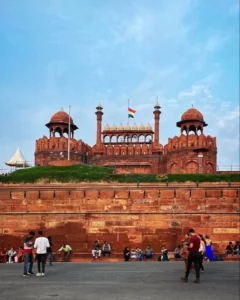
Regional and Global Context New Delhi
The summit holds significance against the backdrop of ongoing conflicts and global realignments. India and Russia have maintained a balanced approach, with New Delhi advocating dialogue and diplomacy to resolve international disputes. The talks may also address regional issues, including Afghanistan’s stability and cooperation within frameworks like the Shanghai Cooperation Organisation (SCO) and BRICS.
Expected Outcomes
Several agreements and memoranda of understanding (MoUs) are expected to be signed during the visit, spanning defense, energy, technology, and education. The leaders are also likely to issue a joint statement outlining their shared vision for regional peace and global stability.
A Symbolic Gesture
President Putin’s visit to New Delhi—his first in several years—reaffirms the importance both nations place on their strategic partnership. As the world watches, the outcomes of this summit could shape not only bilateral relations but also influence broader geopolitical equations.
In a statement ahead of the visit, Prime Minister Modi highlighted the “time-tested” friendship between India and Russia, while President Putin emphasized the mutual commitment to a “multipolar world order.” The two-day summit is poised to deepen this historic partnership, balancing tradition with contemporary strategic needs.New Delhi
Cultural Diplomacy and Symbolism
Beyond the negotiating table, the visit is rich with symbolism. President Putin is scheduled to attend an event marking the 75th anniversary of the establishment of diplomatic relations between India and Russia. A cultural performance showcasing the artistic heritage of both nations is also planned, highlighting the deep people-to-people ties that underpin the political relationship.New Delhi
Expected Outcomes & Significance
The summit is expected to yield a joint statement titled “Vision for the India-Russia Strategic Partnership in the Next Decade.” Several inter-governmental agreements and MoUs are slated for signing in areas such as energy cooperation, space collaboration (including satellite navigation and human spaceflight programs), pharmaceuticals, and education.
Analysts see this visit as a critical exercise in balancing and strategic autonomy for India. For Russia, deepening ties with a major non-Western power like India is vital to offset its international isolation. For India, the relationship provides strategic leverage, crucial defense supplies, and a stable energy source, all while navigating its complex ties with the West.New Delhi
As Prime Modi stated in his pre-visit remarks, the partnership is “time-tested” and based on “mutual trust and respect.” President Putin’s arrival in New Delhi is a powerful signal that, despite global headwinds, this unique bond is poised not just to endure, but to evolve. The outcomes of the next two days will be closely watched in world capitals from Washington to Beijing, as they will significantly influence the contours of a shifting global order.New Delhi
A Summit of Substantive Dialogues: The Core Agendas
The heart of the visit will be a series of restricted and delegation-level talks between President Putin and Prime Minister Modi scheduled for Wednesday. The agenda is comprehensive, reflecting both traditional pillars and new avenues of cooperation:New Delhi
-
Defense & Security: The Bedrock Relationship
Despite India’s diversification of arms suppliers, Russia remains its largest. Key discussions will center on:-
The S-400 Triumf: Progress on the delivery of the remaining regiments of the advanced air defense system, a deal worth over $5.4 billion, will be reviewed. This deal, pursued by India despite the threat of U.S. sanctions under CAATSA, is a testament to the strategic autonomy in the relationship.
-
Joint Production & Technology Transfer: With a focus on “Make in India,” talks will advance on co-production and development of military hardware. This includes the manufacture of the AK-203 assault rifles in Amethi, Uttar Pradesh, and potential collaboration on next-generation weapon systems, including BrahMos cruise missiles, tanks, and submarines.
-
Logistics & Spares: Ensuring a smooth supply chain for spares and maintenance for India’s vast inventory of Russian-origin equipment is a top priority.New Delhi
-
-
Trade, Energy & Economic Resilience
Bilateral trade has surged, crossing $65 billion in the last financial year, though heavily skewed by Indian imports of Russian crude oil. The leaders aim to rebalance and deepen economic engagement:New Delhi-
Oil & Gas: India, now a major buyer of discounted Russian Urals crude, will seek to institutionalize long-term contracts and discuss greater involvement in Russia’s Arctic and Far East oil and gas projects. Negotiations on the long-pending Chennai-Vladivostok maritime corridor will be revived to enhance connectivity and trade flow.
-
Dedollarization & Payments: A major operational challenge has been settling trade in national currencies (Rupee-Ruble) due to Western sanctions on Russia’s financial system. Finding a sustainable and scalable payment mechanism is a critical item on the agenda.New Delhi
-
Nuclear & Coal: Collaboration on the Kudankulam Nuclear Power Plant (Units 5 & 6) and increased coking coal supplies for India’s steel industry will be discussed.
-
-
Geopolitical Alignment & Global Issues
The talks will provide a crucial opportunity for the two leaders to align their perspectives on global hotspots:-
Ukraine Conflict: While India has not condemned Russia, it has consistently called for dialogue and diplomacy. PM Modi’s statement that “this is not an era of war” is likely to be reiterated, with India seeking to understand Russia’s position and possible pathways to de-escalation.
-
Indo-Pacific & Eurasia: The dialogue will balance India’s active role in the Quad (with the US, Japan, Australia) and its commitment to a multipolar world order championed by Russia. Cooperation within BRICS and the Shanghai Cooperation Organisation (SCO) will also be reviewed.New Delhi
-
Afghanistan: Stability in the region and preventing terrorist safe havens will be a shared concern.
-


 Editor